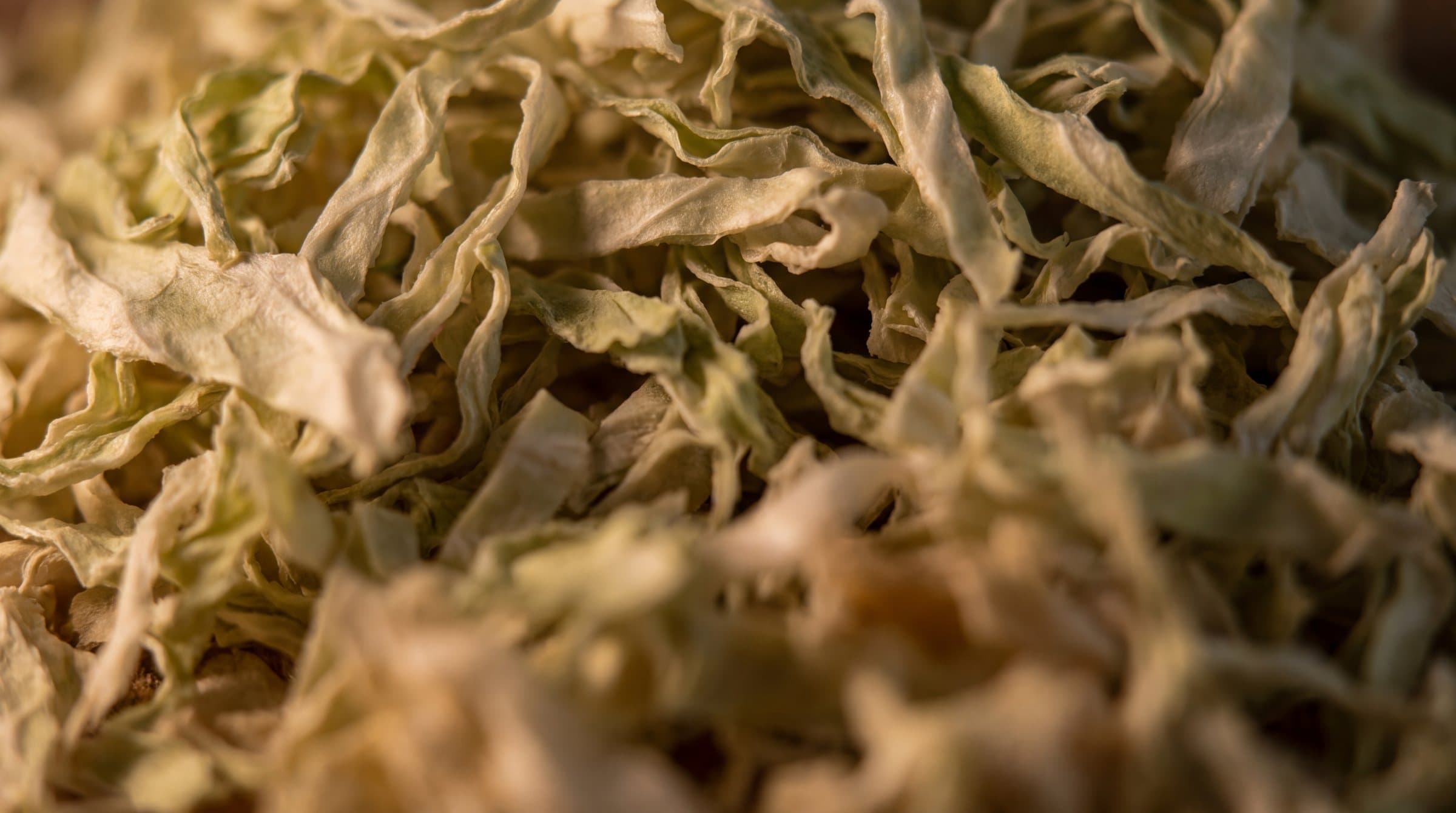
The short version
Take the water out and nothing can grow.
Removing moisture lowers water activity, and bacteria cannot work without it. That is the entire principle, and people have been using it for longer than they have been writing things down.
(01)How it got here
Four inventions, and one of them is ours.
Sun, wind and salt
Drying is the oldest preservation there is. Osmosis in salt or sugar, sun drying in moving air, smoking. Cheap, and slow.
Hot air drying
Invented in France. Everything we make still rests on it.
Canning
Product sealed in a container and sterilised with heat.
The steam retort
Cans sterilised uniformly under pressure. This is what makes a tin shelf stable.
Freeze drying
Later, slower and far more expensive. Excellent, and not always necessary.
(02)Hot air drying
It is about airflow, not temperature.
The job is to lift surface moisture as fast as it arrives, and it happens in three stages. Get the air wrong and the outside dries while the middle stays wet.
Surface moisture goes first
The air lifts the moisture sitting on the outside of the piece.
The inside replenishes it
Moisture moves out from within to replace what left, and that is removed in turn.
The core follows
Small cracks open in the material, the core moisture moves to the surface, and the last of it goes.
Case hardening
Run it too hot, too fast, or with poor airflow and the outside seals while moisture stays trapped in the core. It looks dry. It spoils anyway. This is the failure that separates somebody who has done this for twenty years from somebody who bought a dryer.
(03)The comparison people ask about
Hot air against freeze drying.
What we do
Hot air drying
- Moisture
- 5 to 8%
- Texture
- Chewy to crisp, controllable
- Speed
- Fast
- Cost
- Far lower
The alternative
Freeze drying
- Moisture
- About 5%
- Texture
- Crunchy
- Speed
- Around 24 hours a run
- Cost
- Considerably higher
Freeze drying is often quoted as keeping for twenty or twenty-five years. Properly dried and properly packed, hot air product keeps just as long, because shelf life is decided by packaging and storage rather than by which machine took the water out. The real differences are texture and price.
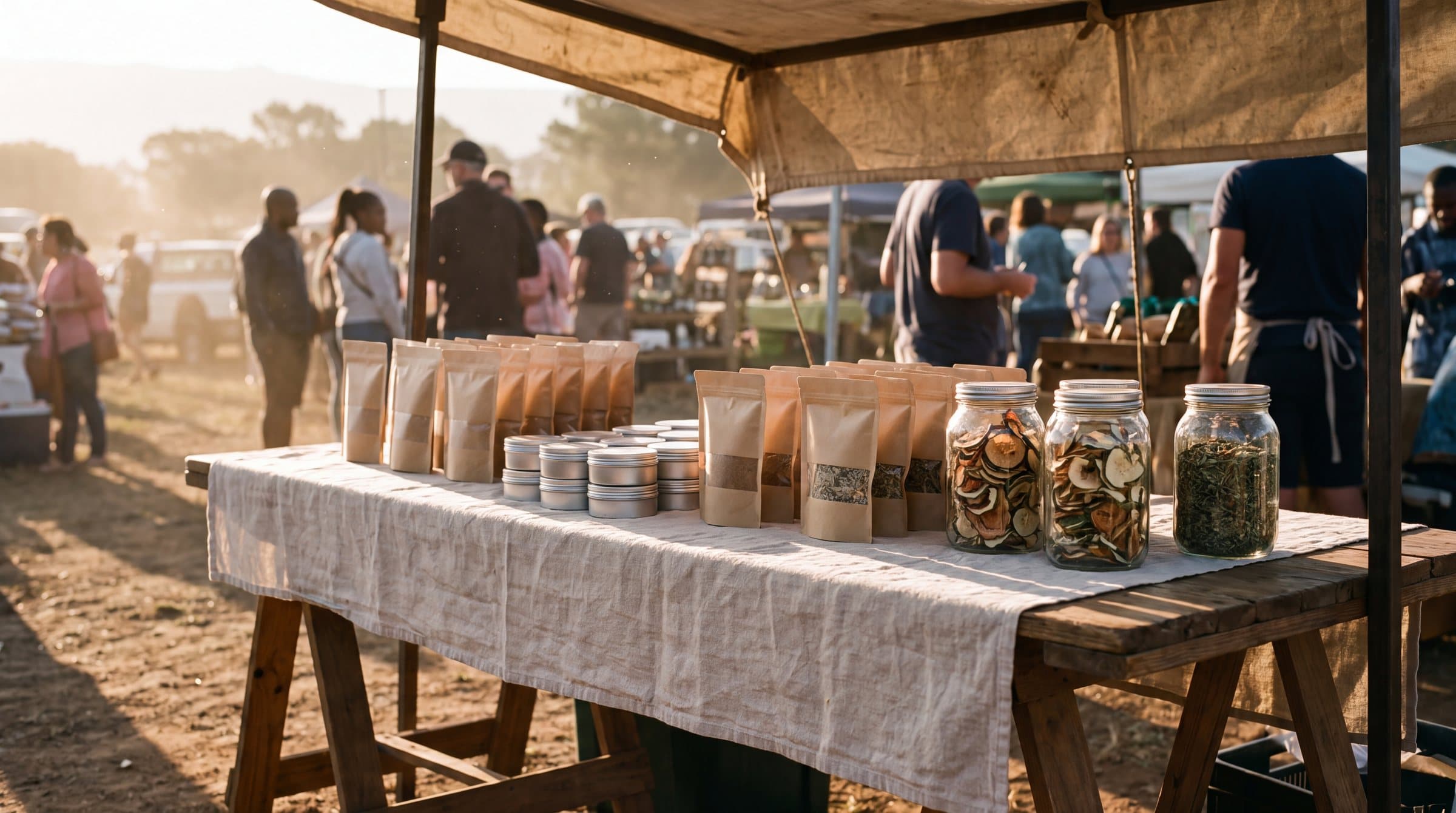
Put a hundred grams in water and see for yourself.
Send us a message and we will tell you what we have, what it costs, and when we are next at a market near you.